Summer is when Las Vegas pools are most likely to turn. June is when it gets serious. The UV index routinely hits 11 or 12. Water temperatures climb fast. The window for catching a chemistry problem before it becomes a visible one gets shorter every week, and by the time you notice the water going hazy, algae already has a foothold.
Algae is not just an aesthetic problem. A pool that has gone green has chlorine at or near zero, which means it is also not sanitary. Most Las Vegas algae blooms are recoverable without draining. Recovery requires addressing what actually caused the bloom, not just what made the water turn.
Algae wins the same way every time. Three conditions, all three present in the same pool.
The Phosphate Problem: Algae Has to Eat
Algae needs a food source to sustain a bloom. In pool water, that food is primarily phosphates. Phosphates are the primary food source for algae. Remove them, and algae struggles to take hold even when other conditions are right.
What most people do not realize is how many ways phosphates enter a pool:
- Las Vegas tap water carries naturally elevated phosphate levels. Every time you top off the pool, you are adding phosphates.
- Swimmers: sunscreen, body oils, and organic waste all introduce phosphates directly.
- Plant debris: leaves, grass clippings, and any organic matter that falls into the water.
- A large pool party can spike phosphate levels significantly in a single afternoon.
The first thing I test for in a pool that has gone green is phosphates. When they are elevated, chemistry becomes a chasing game. You can shock the pool and clear the water, but if you do not remove the phosphate load, you have left the food source behind. It will bloom again.
Phosphate removers are widely available, and the treatment is straightforward. The problem is that most homeowners and many pool services do not test for phosphates as part of a standard visit. When chlorine keeps dropping faster than it should, or a pool keeps going green within weeks of treatment, elevated phosphates are usually the explanation.
The Stabilizer Problem: Chlorine Burns Off in Hours
Chlorine in an outdoor pool is constantly under attack from ultraviolet light. Without cyanuric acid in the water, free chlorine degrades rapidly, especially in direct desert sunlight.
In June, a pool without adequate stabilizer can go from a safe chlorine level to near zero in a few hours on a clear afternoon. By the time you get home from work, the window has already closed.
Cyanuric acid is often described as sunscreen for chlorine. It forms a protective bond with free chlorine that slows UV degradation without eliminating chlorine’s sanitizing ability. The general minimum for an outdoor pool is 30 to 50 parts per million. In Las Vegas, where the UV index routinely hits 11 or 12 during summer, I target 50 to 80 ppm. Below the general minimum, you are losing chlorine faster than it can be replaced. In Las Vegas summer, even 30 ppm is not enough.
I see this regularly in pools that have had a service gap or taken on a lot of water. CYA drifts low, nobody catches it, and suddenly chlorine is disappearing faster than anyone can explain. The pool looked like it was being maintained. One variable fell out of range and everything else followed.
This is also why the same chlorine dose that worked in March stops working in June. Desert summers do not leave room for margin.
For a detailed breakdown of how CYA and free chlorine levels need to be matched in Las Vegas pools, see the pool chemistry guide.
The Filter Mistake: Where Algae Hides After Treatment
This is the one most people do not know about, including a lot of people who have dealt with algae before.
When algae takes hold in a pool, it does not stay in the water column. Algae gets into the filter itself. Dead and dying cells get pulled through the circulation system and collect in the sand, D.E., or cartridge elements. If you treat the water and clear the visible bloom without cleaning the filter, you leave a live colony behind. It will slowly reintroduce itself to the pool. For a full explanation of how each filter type works and why cleaning is a required step in any serious bloom recovery, see our pool system guide.
Aaron runs a small business in the Las Vegas Valley and was managing his pool himself, fitting it in around other obligations. He knew what to do when the pool turned: he shocked it. The water cleared. Two weeks later it came back.
He spent about three weeks on this before calling AquaVision Pool Care. He had done the visible work correctly. What he did not know was that cleaning the filter is not optional after a bloom like this. It is a required step in the recovery, and it has to happen during treatment, not just at the end.
When I looked at his filter, it was still full of the bloom. He had cleared the water twice. The filter had reseeded it both times. Add in high phosphates and depleted CYA, and the pool had no defense once the shock wore off.
I cleared the phosphates, restored the stabilizer level, and cleaned the filters twice over two weeks.
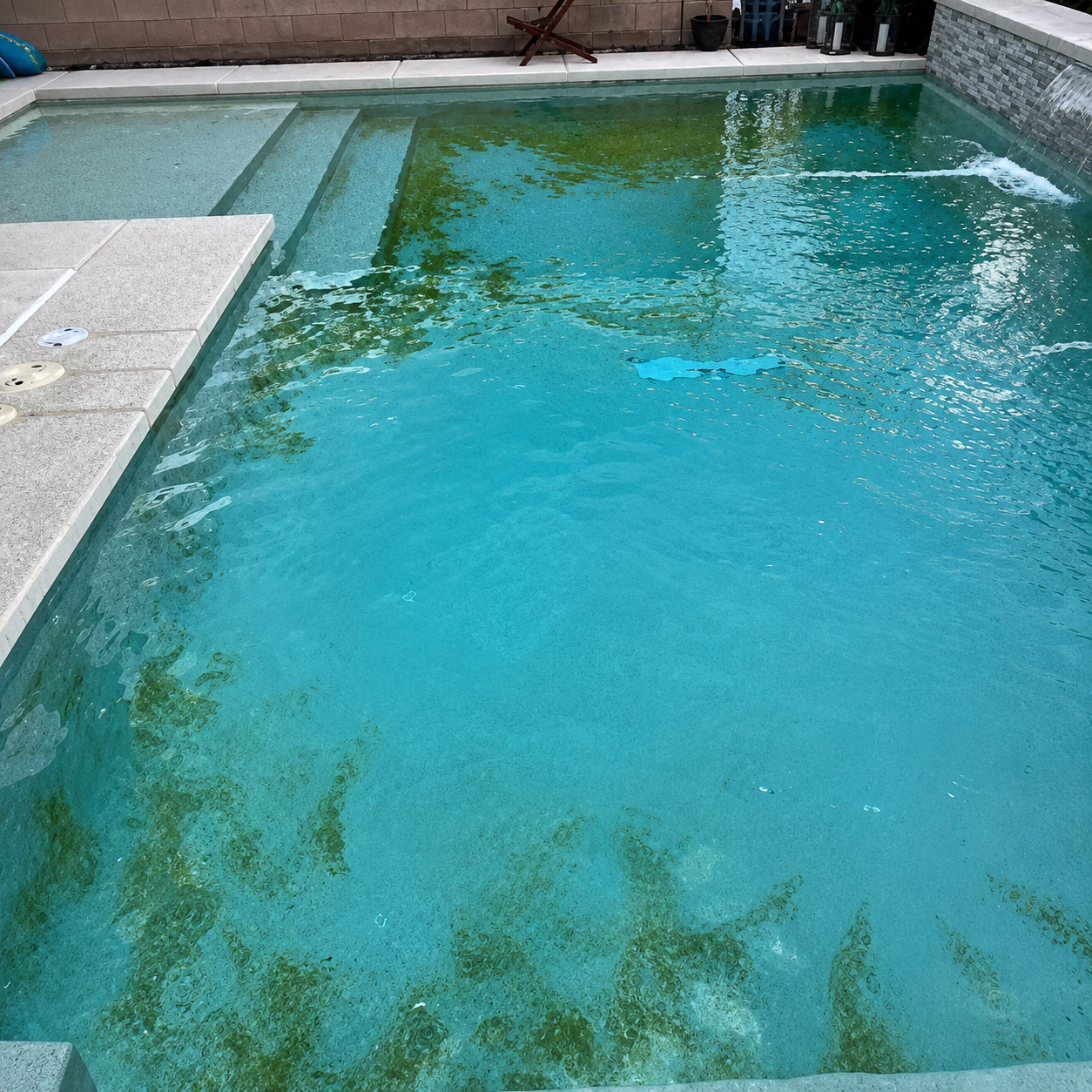
Before
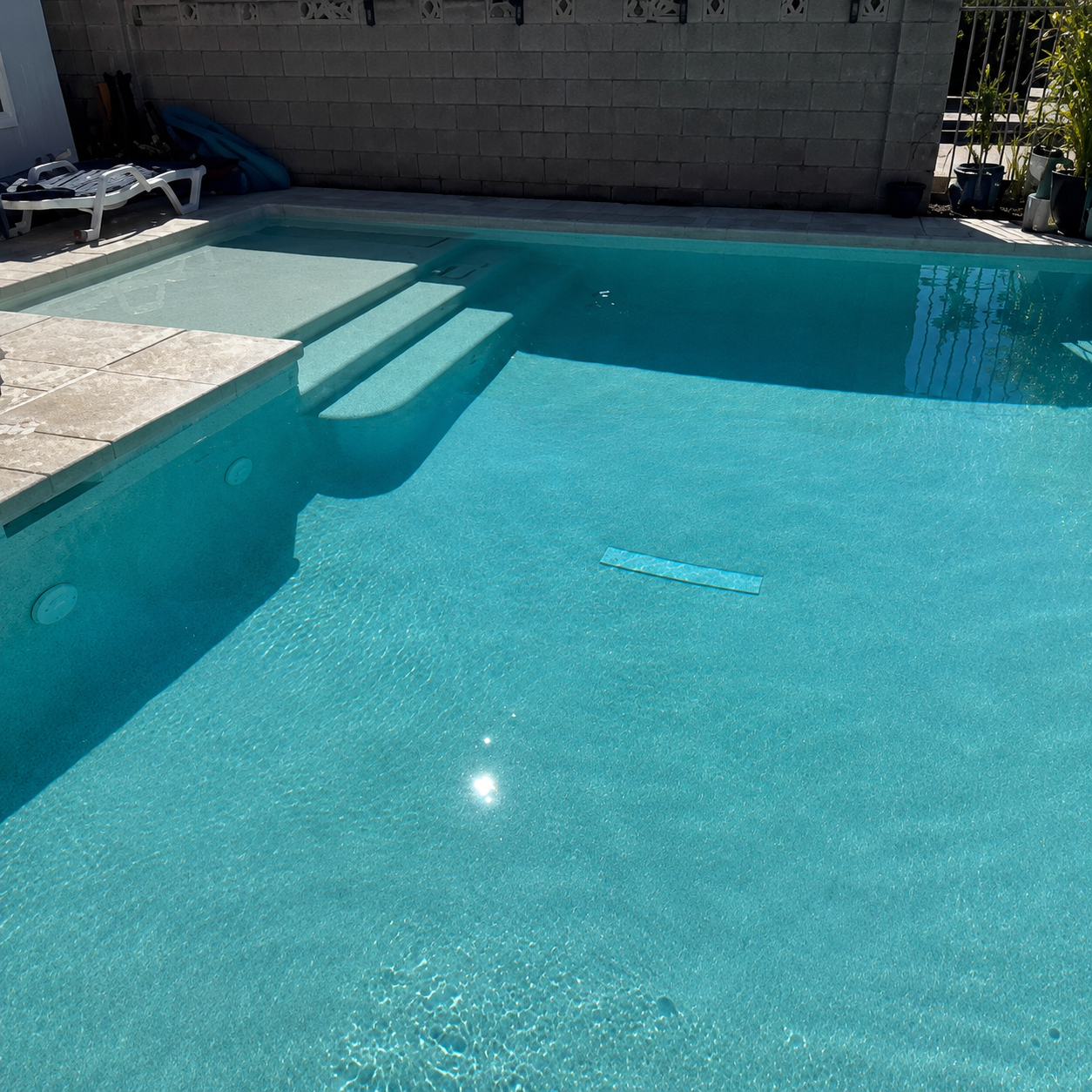
After AquaVision Pool Care
Pool was not drained. Las Vegas Valley.
What a Real Recovery Requires
A pool this far gone needs a step-by-step approach, not a single heavy shock:
- Get your phosphates tested first. Test strips do not measure phosphates. A pool store or a professional with the right kit can tell you within minutes. If they are elevated, treat them before anything else. Shocking a high-phosphate pool is temporary.
- Check CYA. For a Las Vegas outdoor pool, bring it into the 50 to 80 ppm range before you evaluate whether your chlorine is working.
- Brush every surface before and during treatment, including steps, walls, and any dark corners where algae anchors.
- Run the filter continuously through the entire recovery period, not just during treatment.
- Clean the filter during the process, not at the end. In a significant bloom, clean it at least twice.
- Test again before you declare it done. Water can appear clear while phosphate levels remain elevated and the next bloom is already forming.
Most algae that returns after treatment was not fully resolved the first time. The visible evidence went away. The underlying conditions did not.
Why Draining Is Usually the Wrong Move
When a pool looks like the one in the photo above, the instinct is to drain it. In most cases, draining is not necessary and not the right call.
Draining wastes thousands of gallons in a region with real water constraints. It also exposes the pool shell to potential damage, particularly with older plaster finishes that can crack or blister without water pressure against them. And it does not fix anything. If you drain and refill without addressing phosphate levels, stabilizer, and filter condition, the pool will return to the same state.
The pool in these photos was not drained. It was not close.
Recovery, in almost every case, is a chemistry and filter problem. Not a matter of draining and starting over.